

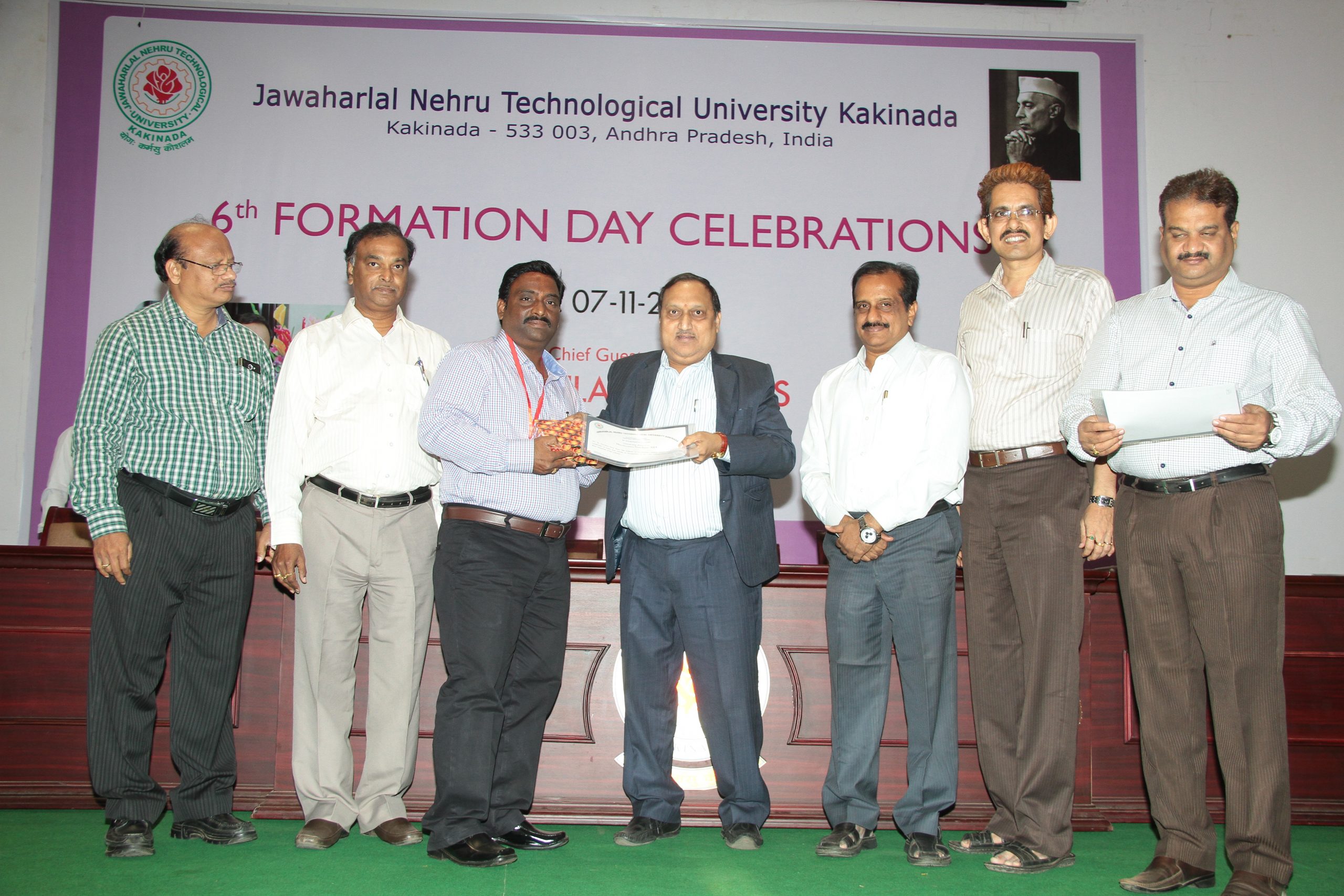
AP STATE BEST TEACHER AWARD from Honourab’le CHIEF MINISTER and Honourab’le EDUCATION MINISTER

To achieve academic excellence and produce globally competent Electrical & Electronics Engineers by imparting knowledge through quality education and meeting ever changing industrial demands and societal needs.
B.Tech in Electrical And Electronics Engineering (EEE)
M.Tech in POWER ELECTRONICS AND DRIVES
Program Outcomes (PO’s)
PO1 | Engineering knowledge : Apply the knowledge of mathematics, science, engineering fundamentals, and an engineering specialization to the solution of complex engineering problems |
PO2 | Problem analysis: Identify, formulate, review research literature, and analyze complex engineering problems reaching substantiated conclusions using first principles of mathematics, natural sciences, and engineering sciences. |
PO3 | Design/development of solutions: Design solutions for complex engineering problems and design system components or processes that meet the specified needs with appropriate consideration for the public health and safety, and the cultural, societal, and environmental considerations. |
PO4 | Conduct investigations of complex problems: Use research-based knowledge and research methods including design of experiments, analysis and interpretation of data, and synthesis of the information to provide valid conclusions. |
PO5 | Modern tool usage: Create, select, and apply appropriate techniques, resources, and modern engineering and IT tools including prediction and modelling to complex engineering activities with an understanding of the limitations. |
PO6 | The engineer and society: Apply reasoning informed by the contextual knowledge to assess societal, health, safety, legal and cultural issues and the consequent responsibilities relevant to the professional engineering practice. |
PO7 | Environment and sustainability: Understand the impact of the professional engineering solutions in societal and environmental contexts, and demonstrate the knowledge of, and need for sustainable development |
PO8 | Ethics: Apply ethical principles and commit to professional ethics and responsibilities and norms of the engineering practice.
|
PO9 | Individual and team work: Function effectively as an individual, and as a member or leader in diverse teams, and in multidisciplinary settings. |
PO10 | Communication: Communicate effectively on complex engineering activities with the engineering community and with society at large, such as, being able to comprehend and write effective reports and design documentation, make effective presentations, and give and receive clear instructions. |
PO11 | Project management and finance: Demonstrate knowledge and understanding of the engineering and management principles and apply these to one’s own work, as a member and leader in a team, to manage projects and in multidisciplinary environments. |
PO12 | Life-long learning: Recognize the need for, and have the preparation and ability to engage in independent and life-long learning in the broadest context of technological change. |
PROGRAM SPECIFIC OUTCOMES(PSO’s)
PSO I | Apply fundamental knowledge to identify, formulate, design and investigate various problems of electrical and electronic circuits, electrical machines, power electronics and power systems. |
PSO II | Solve ethically and professionally various electrical engineering problems in societal & environmental context and communicate effectively.
|
MISSION OF THE DEPARTMENT
MD1 | To provide quality education through state of art laboratories and instruction by highly qualified and experienced faculty in Electrical & Electronics Engineering. |
MD2 | To establish a continuous industry institute interaction, participation, collaboration to contribute skilled Electrical Engineers. |
MD3 | To promote innovative technologies and Research & development (R&D) in Emerging areas of Electrical Engineering. |
MD4 | To build human & social values, entrepreneurship skills and professional ethics among the Electrical Engineers. |
B.Tech – 60
M.Tech – 18
DEPARTMENT LIBRARY DETAILS:
Every department of the college is maintaining their library to cater more members of students. All foreign and Indian journals are made available in the department library for the convenience of faculty and students.
• No. of Titles:
• No. of Volumes: 225
No.s Available in the Department:
• National Journals:
• International Journals:
• Periodicals:
Program | UG | AVAILABLE |
UG | VOLUMES | |
UG | TITLES | |
PG | VOLUMES | |
PG | TITLES |
Program Educational Objectives
| PEO 1: | To provide students, a strong foundation in core areas along with engineering mathematics, sciences and make them globally competent in designing, modeling and critical problem solving. (Quality Education) |
| PEO 2: | To promote research activities in the field of electrical and electronics engineering through lifelong learning and provide solutions to engineering problems for sustainable development of society.(Research) |
| PEO 3: | To bring in holistic growth of the graduates by inculcating good communication skills and socio-ethical values.(Professional Career & Social Responsibility) |
| PEO 4: | To strive for getting employment or higher education by excelling in competitive examinations and be able to work in supportive and leadership roles. (Higher Education) |
Course Outcomes(NRIA20) – B.Tech (EEE) : Click Here…
Course Outcomes(NRIA23) – B.Tech (EEE) : Click Here...
About the Department
The Department of “Electrical and Electronics Engineering (EEE)” was established in the College, since its inception, in the year 2008 with an annual intake of 60 students. The commencement and organization of this ‘Branch of Study’ stem out of following considerations:
1. ‘EEE’ is a Basic Branch of ‘Engineering Study’ that creates interest and provides right ‘perception’ and ‘insight’ into ‘Fundamentals’
2. ‘EEE’ Branch opens up excellent scope for ‘New Avenues’ for adaptation and thus enables pursuit of hi-tech Specialization.
3. NRIIT, as an Engineering Educator and leading Partner in Academics promotes the development and growth of effective, efficient and true EEE Professionals, through adherence of the highest Standards of Academic Integrity and overall Ethical conduct, to inculcate a sense of Individual Responsibility and also to collectively participate in reinforcing and maintaining an Environment of Honor, Trust and Standards. It has the primary obligation and responsibility to realize and meet the compelling necessity and urgency for wide ranging, challenging and fast growing Global Demands for EEE Professionals.
NRIIT, is proud of this Initiative in 2008 – to start this Course of study, along with a few other Branches of Study and as of Today, has emerged as an Institution, imparting Quality Engineering Education and making contributions to hi-tech Industries, by producing EEE Graduates, with Professional Abilities and right Attitude.
While the First year Core Curriculum begins with a common knowledge Base and customizes Students by grounding in basic Engineering Foundation and in Critical Hands on Skills in Engineering Practices, the Course has access to enhance the Learning, Student Perspective and Experience to develop Specialization in areas of ‘Electrical and Electronics Engineering’. Class room learning is complemented by Practice in Hi-Tech Labs, Projects and Hands on Experiences, so as to foster Knowledge in ‘Engineering and Technology’.
The Department strives to develop long term relationships with Industries and market the Student’s Talents effectively. The Students are thus provided high level ‘Leads and Pathways’ that enable them to gain access to a broad range of ‘high potential’ and ‘hi-tech’ Career Opportunities.

The Department Academic Calendar is designed to train the students as per the industry needs.

The laboratories are fully equipped as per the latest trends in this engineering discipline.

A well built customized application to monitor students' outcome based performance.

The Class Rooms are well equipped with gallery-type seating, Digital LED Projectors, Wi-fi, AC's, Speakers, etc.

The curriculum is designed innovatively meeting Placement Training requirements and Industry Demands.

Well Experienced faculty including Doctorates pave a way for research in the department.
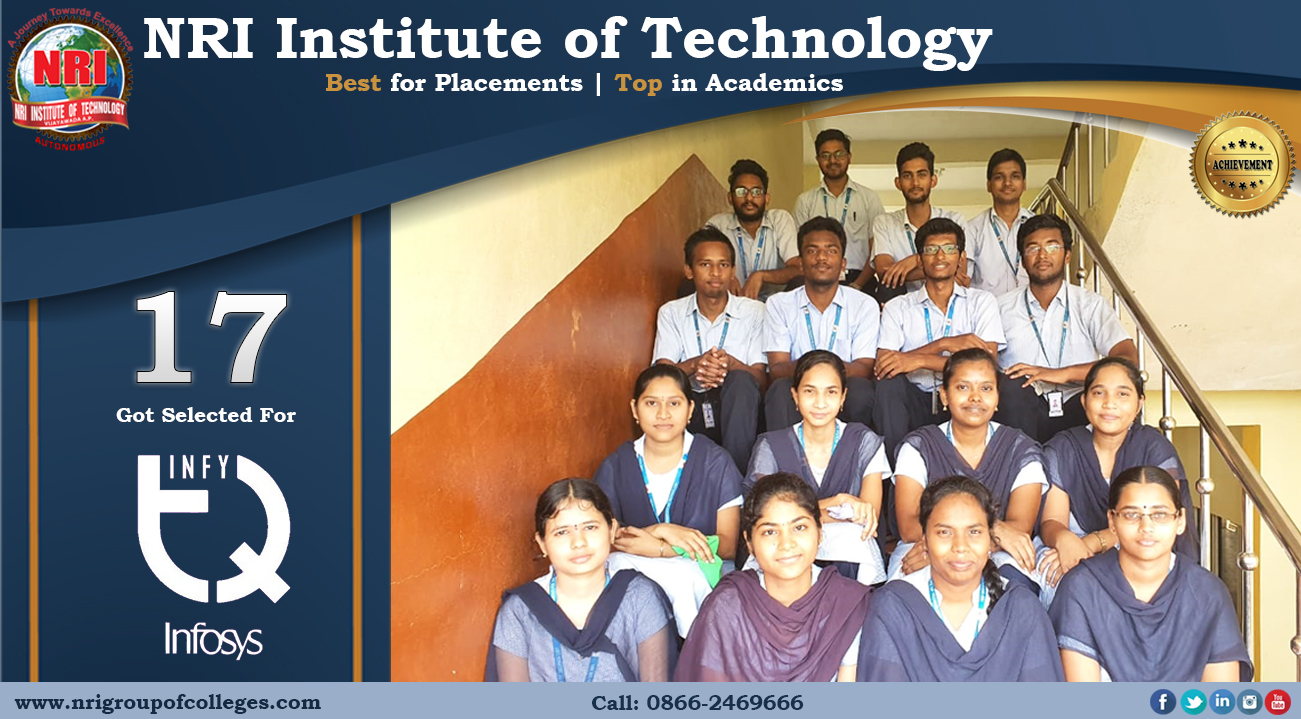
The training and placement activities by industrial experts start from the first year onwards and are embedded in the academic curriculum.
Our Students are offered a wide range of e-Resources for their course work as a part of the academic curriculum.